I want to share an important reality: many people do not try to properly understand taxation. Based on our experience, most individuals are unaware of the applicable tax rates. This lack of knowledge creates significant confusion, and as a result, many people step back or avoid dealing with taxes altogether.
One of the most common questions that always comes to people’s minds is: How is taxable income determined? There is a widespread misunderstanding that the tax charged is applied to the entire income amount.
The short answer is no. Tax is not applied to the total income in the way most people assume. It is calculated based on taxable income according to the relevant tax slabs and rules.
Tax on taxable income means that tax is applied only to a specific portion of your income, not your total income. This amount is calculated after considering all legal deductions, exemptions, and adjustments allowed under the law.
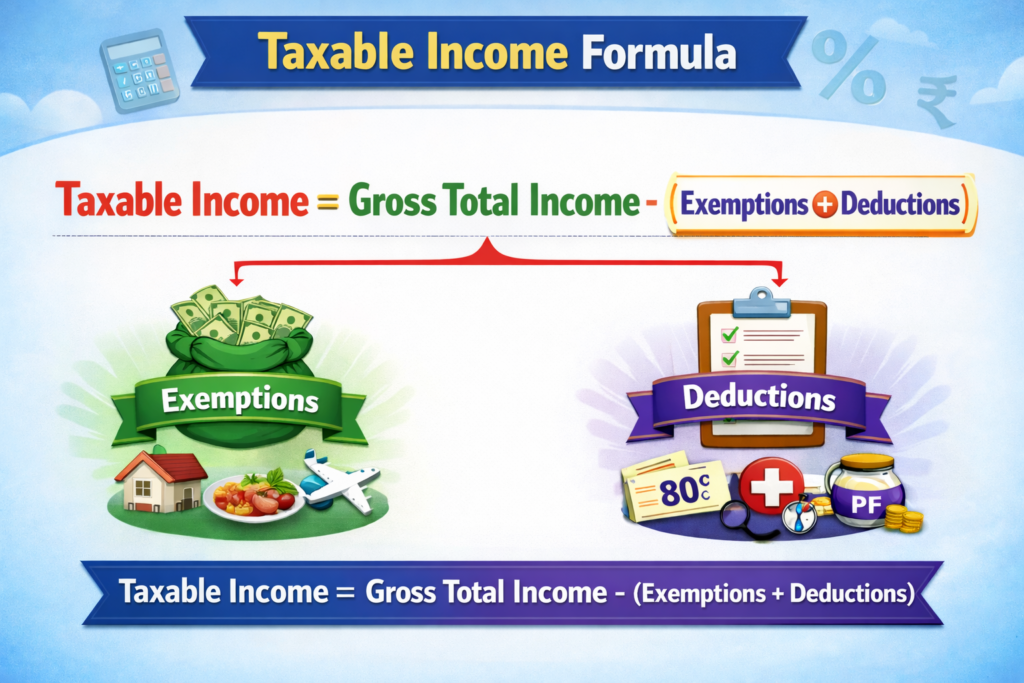
In simple terms, your total income is first reduced by applying the relevant deductions and exemptions. The remaining amount is called taxable income, and tax is charged only on that portion according to the applicable tax rates.
This awareness is very important for everyone. When people understand how taxable income is calculated, they can legally benefit from available deductions and avoid unnecessary confusion about taxes.
Yearly Business Tax Calculator
Income Tax Ordinance 2001 | Tax Year 2026
Legal Note: This calculation is based on the First Schedule (Part I) of the Income Tax Ordinance 2001 for Non-Salaried individuals.
Common Confusions About Tax
Many people often think this way, but that’s not how it actually works when it comes to taxes. They see the tax on their paycheck and assume that it is the only amount they owe, but that’s not the case. They frequently ask, ‘Why does my tax seem so high?’ The reality is that tax calculations take into account various factors, and common mistakes happen when certain deductions are not automatically applied. Only after considering all applicable deductions and applying the correct calculations does the actual tax amount get finalized. By understanding how taxable income is calculated, you can avoid these common confusions and manage your taxes more effectively."
Gross Income vs. Taxable Income
First, we need to clear the basic concept and understand the rules. Imagine you own a big burger and pizza shop. The total amount you earn from sales, after accounting for all your expenses in producing a product, is your Gross Income. This includes everything you earn—your salary, bonuses, house rent allowance, or any side hustle income.
However, the government doesn’t require you to pay tax on your entire income. You are allowed to subtract certain “slices” in the form of deductions and exemptions. The remaining portion of your income—the part that actually gets taxed—is called your Taxable Income.
In my experience, once people understand this, everything becomes much clearer. Knowing the difference between gross income and taxable income helps you plan better, reduce confusion, and legally minimize your tax. Moreover, this awareness ensures you don’t overpay and can take full advantage of the benefits allowed under tax law.
Filing Your Return for Tax Year 2026: 5 Pro Tips
The tax year 2026 is approaching, during which the tax return for the 2026 tax year will be filed. It is important to keep certain key points in mind while filing your return to avoid penalties and to optimize your tax correctly. Therefore, make sure to avoid these 5 common mistakes.
Document Every Business Expense
In 2026, the FBR Income Tax Department has hired new external auditors to improve audit performance, and audits this time may be stricter. You must keep proper records of all deductions or exemptions you claim, including bills, invoices, and purchase/sales registers. If you do not have proof, there is a high chance that your tax liability may increase. Therefore, it is essential to maintain copies of all purchase and sales registers along with invoices and bills.
Separate Personal and Business Expenses
Tax matters are handled through proper technical understanding, where SROs (Statutory Regulatory Orders), rules, and the Income Tax Ordinance are carefully reviewed and applied.
One of the biggest mistakes people make is claiming personal expenses—such as household electricity bills, personal petrol expenses, or other private invoices—as business expenses without proper consideration. This approach is incorrect in the field of taxation.
In tax law, the concept of business expenses and personal expenses is clearly separate. These two categories must not be mixed. Only expenses that are wholly and exclusively incurred for business purposes are allowable.
Maintaining a clear distinction between business and personal expenses is essential to ensure accurate taxable income calculation and to avoid future tax complications.
Reconcile Your Bank Statements
This is the core concept of a business audit and the basis on which the tax department calculates and issues withholding tax notices. Unfortunately, many taxpayers overlook this critical point and do not engage a professional consultant to file their tax returns properly.
Bank reconciliation is a fundamental requirement. It means that the total debit and credit entries reflected in the bank statement as of 30 June must correspond with the revenue declared at the time of filing the tax return. The figures reported in the return and the amounts reflected in the bank record should match.
If there is a mismatch between declared revenue and bank transactions, it can lead to future audit proceedings or withholding tax notices from the department. In such cases, the taxpayer will be required to explain why higher or lower revenue was reported in the return compared to the bank record.
Therefore, proper reconciliation must always be completed before filing the tax return to ensure accuracy, compliance, and to avoid future legal complications.
Claim Withholding Tax (WHT)
Withholding tax is an advance tax that is deducted at the time of a transaction. For example, banks deduct tax on certain transactions, and a higher rate is usually applied to individuals who are listed as non-filers.
This deducted amount can be claimed in your income tax return, allowing you to benefit from the adjustment. Withholding tax is also applicable to various other transactions, including mobile phone bills, vehicles, property transactions, and other categories specified under the Income Tax Ordinance, 2001.
It is important not to forget to adjust this withholding tax against your final tax liability. Since it is an adjustable tax, it can significantly reduce the amount of tax payable and, in many cases, help you save a substantial amount of money.
Declare All Assets in Wealth Statement
The Wealth Statement is one of the most important components of an income tax return. A Wealth Statement requires the taxpayer to declare all movable and immovable assets. This includes property such as plots, vehicles, gold, cash in hand, and bank balances. All assets must be properly declared at the time of submitting the return.
The Wealth Statement reflects your financial position and net worth. It provides the tax authorities with a clear picture of your assets and overall financial standing.
A common mistake many individuals make is failing to declare their movable and immovable assets in an attempt to reduce their tax exposure. They often avoid disclosure out of fear that questions may be raised regarding the source of their assets. However, this approach is incorrect and risky.
If assets are not declared, the audit officer may issue a notice on the grounds of concealment. The department may already have information regarding your assets and may question why they were not disclosed in the Wealth Statement.
To avoid such complications, it is essential to file an accurate and complete Wealth Statement. Seeking proper guidance from a qualified tax consultant ensures compliance and minimizes the risk of future legal issues.
Legal Disclaimer
English: The information provided in this blog, including the tax calculator and filing tips, is for educational and informational purposes only. While we strive to provide accurate data according to the Pakistan Income Tax Ordinance 2001, tax laws can change frequently. This content should not be considered as professional legal or financial advice. We recommend consulting with a certified tax advisor or a legal professional before filing your returns.
Roman Urdu: Is blog mein di gayi tamam maloomat aur tax calculator sirf education aur rehnumayi (guidance) ke liye banaya gaya hai. Humne koshish ki hai ke data sahi ho, magar tax laws waqt ke sath badalte rehte hain. Ise mukammal legal advice na samjha jaye. Apni return file karne se pehle kisi professional tax consultant se mashwara zaroori karein taaki kisi bhi kism ki galti se bacha ja sake.